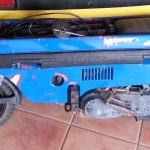
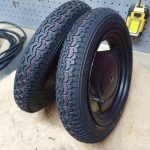
After the first impressions, it was time to start a proper disassembly and calmly assess what was hiding under the plastics. This was when the Motocompo began to reveal the real work ahead.
At first glance it was already clear that this was not going to be a quick restoration. As parts came off, the overall condition proved to be quite poor: rust on practically every metal part, a lot of built-up dirt and several components that would need to be checked one by one before deciding whether they could be saved or had to be replaced.
Damage Assessment
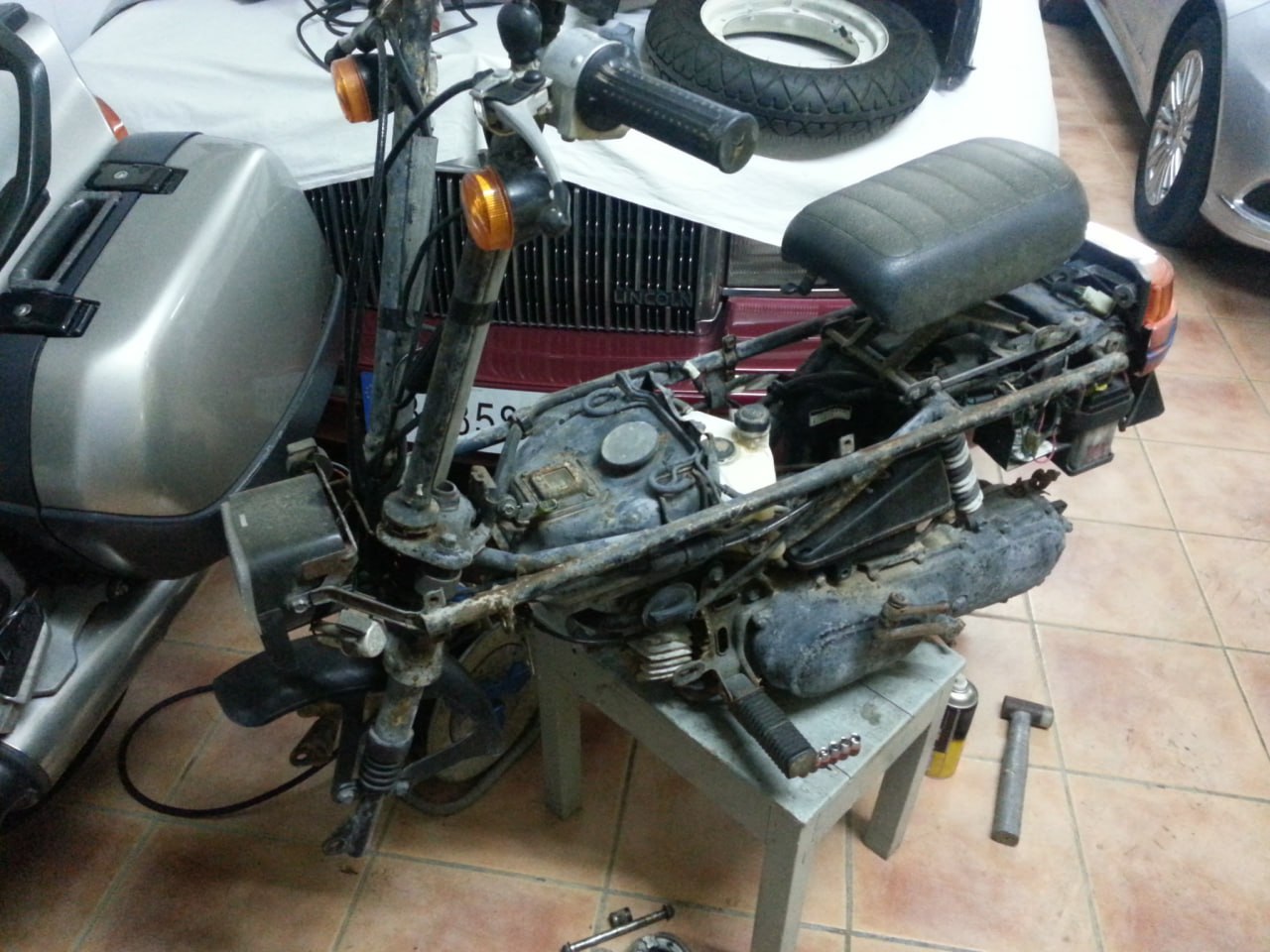
With the Motocompo now partially disassembled, the real condition of the whole bike can be seen much more clearly. The frame, brackets, screws, fork and several structural areas show rust and dirt. It was not just an aesthetic issue: before fitting anything nice, it was necessary to check which parts were still usable.
Motocompo Without Panels
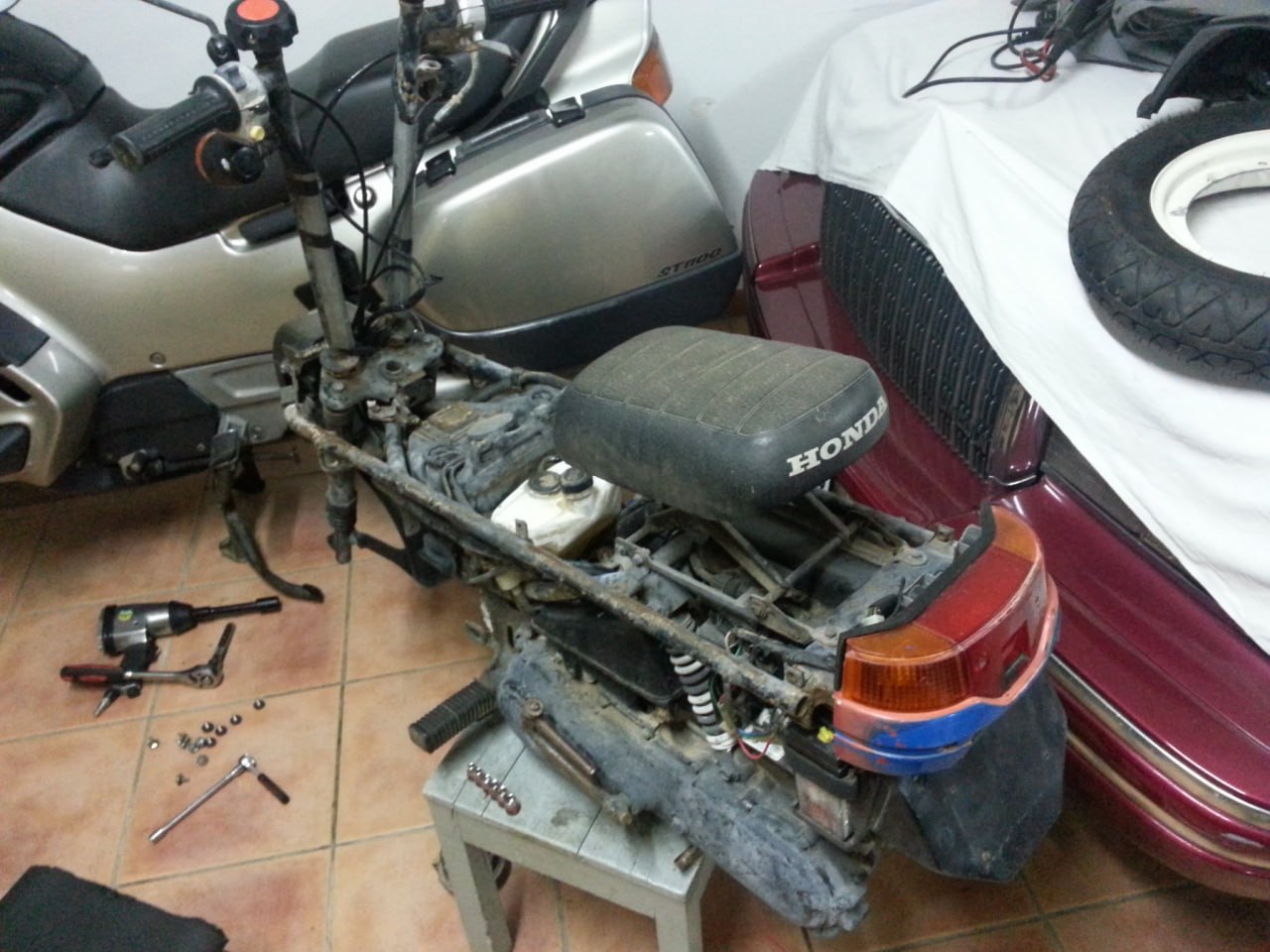
Once the body plastics were removed, it was clear that the bike needed a complete inspection. The seat was still fitted, but the frame, part of the wiring, the tank area and the rear assembly were already exposed. Rust appeared everywhere: frame tubes, brackets, screws, suspension area and auxiliary parts.
It was also clear that many parts had aged badly. Some were simply dirty, but others looked as if they had not been removed for years. At this point it was obvious that a quick surface clean would not be enough.
Rear Area, Engine and Wiring
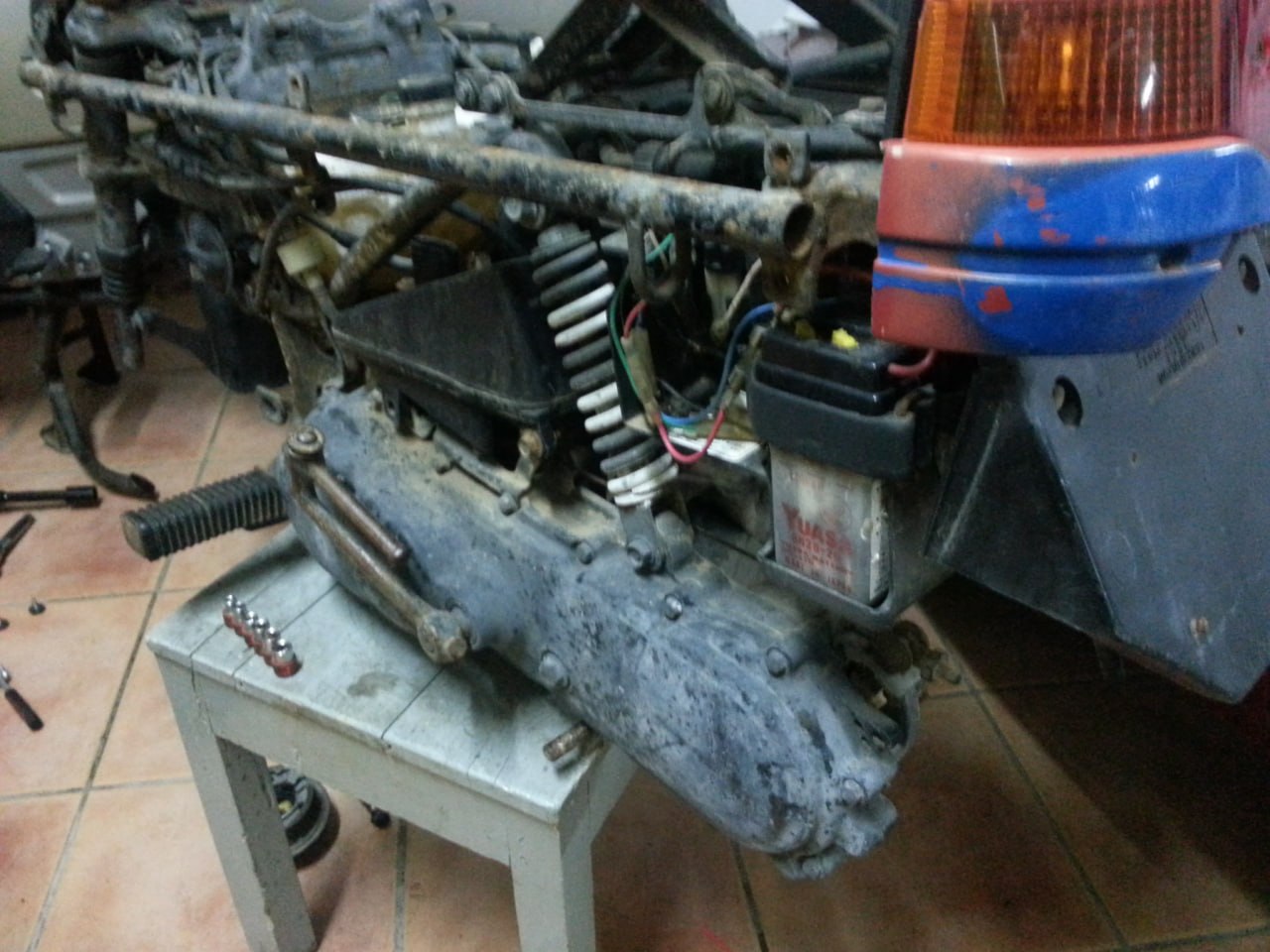
In the rear detail, the overall condition is even clearer: a very dirty engine, rusty screws, worn brackets, wiring to be checked and parts that would need to be removed patiently. The battery and rear light area also required a complete inspection, both electrically and cosmetically.
Conclusion of This First Disassembly
The assessment was quite clear: there was work everywhere. The Motocompo was complete in some important areas, but its overall condition was worse than it had first appeared. It was time to disassemble, sort parts, clean, remove rust and decide what could be saved.
This was the point where the restoration stopped being just a nice idea and became a real project. From here on, there was no turning back.